Showing posts with label Porsche. Show all posts
Wednesday, June 22, 2011
2011 Porsche 911 GT3 RS 4.0
The 911 GT3 RS, one of Porsche's most popular, coveted and successful track-inspired production cars, has been given a final, thrilling injection of thoroughbred motorsport technology resulting in the 2011 Porsche 911 GT3 RS 4.0. Limited to 600 vehicles worldwide, the 911 GT3 RS 4.0 brings together in a sports car the attributes that have made the Porsche 911 GT3 a consistent winner on the race track.
The motorsport-derived 4.0-liter engine, already the highest displacement 911 engine ever, also features the highest per-liter output -- 125 horsepower (hp) per liter -- from a naturally aspirated Porsche flat-six engine. The engine uses forged pistons, the connecting rods are fashioned from titanium, and the crankshaft has been lifted unchanged from the 911 GT3 RSR race car. It achieves its maximum power of 500 hp at 8,250 rpm. Maximum torque of 339 ft/lbs is reached at 5,750 rpm.
The 911 GT3 RS 4.0 offers truly impressive performance, lapping the famed Nürburgring-Nordschleife in 7 minutes and 27 seconds. Available exclusively with a six-speed manual transmission, the 911 GT3 RS 4.0 sprints from 0 to 60 mph in only 3.8 seconds, and with its gearing designed for the race circuit it reaches the 124 mph mark on the race track in under 12 seconds.
The 911 GT3 RS 4.0's outstanding driving dynamics come from numerous, meticulously coordinated details. In addition to using suspension components typically encountered in motor racing, weight reduction is also of supreme importance. Equipped as standard with lightweight components such as light but strong carbon fiber sport bucket seats, carbon fiber front fenders and luggage compartment lid, and weight-optimized carpets, the two-seater's ready-for-action weight is just 2,998 lbs with a full fuel tank. The 911 GT3 RS 4.0's power-to-weight ratio is 5.99 lbs/hp.
This limited edition 911 is painted Carrara White as standard and emphasizes its proximity to motor racing by its dynamic appearance. Signature characteristics are the wide track, the low vehicle position, the large rear wing with side plates, central twin tailpipe, and the aerodynamically optimized body. Air deflection vanes mounted on either side of the front bumper – called 'flics' or dive planes – make their first appearance on a production Porsche. They create increased downforce on the front axle, and together with the steeply inclined rear wing, provide aerodynamics on par with its performance capabilities. As a result, at the 193 mph top track speed, aerodynamic forces exert an additional 426 lbs of downforce, thus pushing the 911 GT3 RS 4.0 onto the road.
With a manufacturer's suggested retail price starting at $185,000 (excluding destination), the new Porsche 911 GT3 RS 4.0 goes on sale in the United States in late 2011.
Sunday, June 5, 2011
2012 Porsche Panamera Diesel
Porsche Panamera Diesel
The Panamera range extends with the introduction of the new Porsche Panamera Diesel, further enhancing the model's appeal to UK customers. A luxury Gran Turismo, the Porsche Panamera Diesel is capable of taking four passengers in sporting comfort from Lands End to Loch Ness without refuelling.
Coping effortlessly with short bursts of speed and cross country touring, this long distance sporting performance is delivered by the smooth-running 3.0-litre V6 engine with a rated output of 250 hp (184 kW) achieved between 3,800 rpm and 4,400 rpm. The maximum torque of 550 Nm, available all the way from 1,750 rpm to 2,750 rpm, delivers high pulling power. It is exclusively available with rear-wheel drive and uses a highly efficient eight-speed Tiptronic S as standard. The six-cylinder turbo diesel engine powers the new Gran Turismo from 0 to 62 mph (0-100 km/h) in 6.8 seconds, with a top speed of 150 mph (242 km/h).
The Porsche Panamera Diesel offers a highly appealing driving range of more than 745 miles on one 80-litre tank, emits 172 g/km and delivers a Combined fuel economy of 43.5mpg (6.5 l/100 km). With the optional lower rolling resistance tyres, efficiency improves further still, to 167 g/km and 44.8mpg on a Combined cycle.
The model's 3.0-litre V6 engine is state of the art in diesel technology: common rail direct injection through piezo valves at a pressure of 2000 bar, turbocharging employing electrically controlled variable geometry turbochargers (VGTs) and emission control achieved by controlled exhaust gas recirculation, oxidation catalyst and particle filter.
Performance, generous torque and low consumption are accompanied by smooth running, reliability and low emissions. An additional contributing factor is the auto start/stop function, which is fitted as standard. Adaptive air suspension is available as an alternative to the standard steel spring suspension, to provide an even wider range of suspension settings to extend the driving qualities further still.
Through its proportions alone, the Panamera stands out clearly in its market segment: measuring 1931mm (76.0in) in width and 1418mm (55.8in) in height, the Panamera is both wider and lower than comparable four-door models. The unmistakable, sleek GT silhouette is created by an overall length of 4970mm (195.7in) and short, sporting overhangs front and rear. This new model can be recognised by the lettering 'diesel' on the front doors.
Every Panamera, including the new 2012 Porsche Panamera Diesel model, has a high level of standard specification that includes leather interior, Porsche Active Suspension Management (PASM), Bi-Xenon headlights, front and rear ParkAssist, tyre pressure monitoring, automatic dimming rear view mirrors, Porsche Communication Management with touch-screen satellite navigation and audio controls, cruise control and a three year warranty.
Fitted to every Panamera is a Porsche Vehicle Tracking System (VTS), a sophisticated vehicle security package approved to Thatcham Category 5 standard, and customers will also be able to explore the potential of their new car by participating in a complimentary course at the Porsche Experience Centre, Silverstone.
The Porsche Panamera Diesel costs £62,134 (80,183 euro in Germany inc. VAT) and is on sale in the UK from August 2011.
The Panamera range extends with the introduction of the new Porsche Panamera Diesel, further enhancing the model's appeal to UK customers. A luxury Gran Turismo, the Porsche Panamera Diesel is capable of taking four passengers in sporting comfort from Lands End to Loch Ness without refuelling.
Coping effortlessly with short bursts of speed and cross country touring, this long distance sporting performance is delivered by the smooth-running 3.0-litre V6 engine with a rated output of 250 hp (184 kW) achieved between 3,800 rpm and 4,400 rpm. The maximum torque of 550 Nm, available all the way from 1,750 rpm to 2,750 rpm, delivers high pulling power. It is exclusively available with rear-wheel drive and uses a highly efficient eight-speed Tiptronic S as standard. The six-cylinder turbo diesel engine powers the new Gran Turismo from 0 to 62 mph (0-100 km/h) in 6.8 seconds, with a top speed of 150 mph (242 km/h).
The Porsche Panamera Diesel offers a highly appealing driving range of more than 745 miles on one 80-litre tank, emits 172 g/km and delivers a Combined fuel economy of 43.5mpg (6.5 l/100 km). With the optional lower rolling resistance tyres, efficiency improves further still, to 167 g/km and 44.8mpg on a Combined cycle.
The model's 3.0-litre V6 engine is state of the art in diesel technology: common rail direct injection through piezo valves at a pressure of 2000 bar, turbocharging employing electrically controlled variable geometry turbochargers (VGTs) and emission control achieved by controlled exhaust gas recirculation, oxidation catalyst and particle filter.
Performance, generous torque and low consumption are accompanied by smooth running, reliability and low emissions. An additional contributing factor is the auto start/stop function, which is fitted as standard. Adaptive air suspension is available as an alternative to the standard steel spring suspension, to provide an even wider range of suspension settings to extend the driving qualities further still.
Through its proportions alone, the Panamera stands out clearly in its market segment: measuring 1931mm (76.0in) in width and 1418mm (55.8in) in height, the Panamera is both wider and lower than comparable four-door models. The unmistakable, sleek GT silhouette is created by an overall length of 4970mm (195.7in) and short, sporting overhangs front and rear. This new model can be recognised by the lettering 'diesel' on the front doors.
Every Panamera, including the new 2012 Porsche Panamera Diesel model, has a high level of standard specification that includes leather interior, Porsche Active Suspension Management (PASM), Bi-Xenon headlights, front and rear ParkAssist, tyre pressure monitoring, automatic dimming rear view mirrors, Porsche Communication Management with touch-screen satellite navigation and audio controls, cruise control and a three year warranty.
Fitted to every Panamera is a Porsche Vehicle Tracking System (VTS), a sophisticated vehicle security package approved to Thatcham Category 5 standard, and customers will also be able to explore the potential of their new car by participating in a complimentary course at the Porsche Experience Centre, Silverstone.
The Porsche Panamera Diesel costs £62,134 (80,183 euro in Germany inc. VAT) and is on sale in the UK from August 2011.
Wednesday, May 4, 2011
2012 Porsche Panamera Turbo S
Porsche will reveal its most powerful Panamera for the first time in North America on April 20, 2011 at the New York International Auto Show.
The engine in the new top-of-the-line Panamera is based on the already proven and powerful twin-turbocharged V8 engine in the Panamera Turbo. The 4.8 liter, V8 engine in the Turbo S achieves a maximum output of 550 horsepower, which is 10 percent more than the 500 horsepower delivered by the Panamera Turbo. The torque is also increased over the Turbo from 516 lb-ft to 553 lb-ft. In the "Sport" and "Sport Plus" mode of the standard Sport Chrono Package Turbo, the overboost function can temporarily generate additional torque with a peak rating of 590 lb.-ft.
The power increase delivered in the Panamera Turbo S can be attributed to two main enhancements: new twin turbochargers with titanium–aluminum turbines and a modified engine control. Titanium–aluminum reduces the turbine and compressor wheel's weight, which results in a quicker turbo response that improves the engine's agility.
The formidable powerplant that lies beneath the hood of the Panamera Turbo S is capable of propelling it to sports-car sprint times. With the help of Launch Control, the newest Panamera can reach 60 mph in just 3.6 seconds. The top track speed is 190 mph. And despite this increased performance, fuel consumption is expected to remain comparable to the Panamera Turbo that delivers an EPA estimated rating of 15 mpg city/23 mpg highway (18 mpg combined). Official EPA fuel economy estimates for the Panamera Turbo S will be available when the car goes on sale in North America.
Even for a world-class luxury car, the Panamera Turbo S boasts an extraordinarily high level of comprehensive features. In keeping with its sporty concept, it comes equipped with the most important driving-dynamic control systems. For example, Porsche Dynamic Chassis Control (PDCC) is an active anti-roll system that significantly reduces lateral body movement during corning, which enhances stability, handling and overall occupant comfort. Porsche Torque Vectoring Plus (PTV Plus) is also standard and works to help ensure superior traction and higher-performance cornering by applying a variable torque split to the rear wheels in combination with an electronically controlled rear differential lock. Also standard is Porsche's advanced speed-sensitive Servotronic steering system, a sports exhaust system, and the Sport Chrono Package Turbo that further tunes the engine and suspension at the touch of the "Sport Plus" button.
While the sporting character of the new Panamera Turbo S is most apparent behind the wheel, the car's exterior tastefully exudes its high-performance ambitions. The new 20-inch Turbo II wheels with increased rear axle track width, side skirts from the Porsche Exclusive range and the adaptive four-way extending rear spoiler express the car's elite performance abilities. Inside, the fusion of exclusivity and sportiness is conveyed in the interior by the standard bi-color leather finish. A new combination of black/cream is offered exclusively for the new Panamera Turbo S with Agate Grey/cream also being added as an exclusive option later this year. Agate Gray Metallic will also be an exclusive exterior color.
The new Porsche Panamera Turbo S will go on sale in the U.S. later this spring, and will have a base MSRP of $173,200, excluding $975 for delivery and destination.
Labels:
Porsche,
Wallpapers and Information
Monday, April 18, 2011
2011 Porsche 911 GT2 RS
New 911 GT2 RS has a strong ratio of only 2.21 kg or 4.9 kg of body weight per horsepower . Porsche 911 GT2 RS boxer engine with a 3.6-liter six-cylinder engine is driven by two turbochargers with variable geometry specific to the Porsche driven in conjunction with a gasoline engine drives the rear wheels via a six-speed manual transmission.
The Porsche 911 GT2 RS is the fastest and most powerful road sports car ever built in the history of Dr. Ing hc F. Porsche AG, Stuttgart, and mark the peak in the range of 911. With a power of 90 horsepower and low weight of 70 kg compared with the previous 911 GT2 The new Porsche 911 GT2 RS has a power to weight ratio averaged only 2.21 kg per horse by far the best power / weight in your class.
Obviously, these are the ideal ingredients for a sports car with ultra-high performance supreme agility, combined with truly blistering performance on the road and of course Porsche exemplary intelligent performance attributes. “RS GT2″ model designations provides greater differentiation in the doors and rear engine cover. Behind the wheel of a Porsche 911 GT2 RS, the style of sports performance continues. Porsche GT2 RS – Key facts and technical specifications
Take features developed for the Porsche 911 GT2 RS include: use of small arms and diagonal cross aluminum rear suspension, carbon fiber reinforced front cover and rear spoiler, rear window and the polycarbonate side windows, bonnet light, lighter single-mass flywheel, lighter lithium-ion battery.
Dynamic improvements include: new air charge intercooler, metal bearings with full support ball joints in front suspension, door panels, lightweight, wider track front, turbo increased to 1.6 bar to 1.4 bar, wider front track with wider tires (same size as the GT3 RS).
As the fastest Porsche production car ever, the German automaker is making sure that the car’s exterior and interior features also won’t disappoint. So they decided to go all-out on the car’s aesthetics, starting with the lavish use of carbon-fiber-reinforced (CFR) components in a matte-black surface finish, even wider wheels and flared wheel arches at the front, new 911 GT2 light-alloy wheels with central locking, as well as ”GT2 RS“ model designations on the doors and rear lid. As for the interior, the 911 GT2 RS exudes the flair and panache of top quality sporting performance in virtually every detail, including the lightweight bucket seats made of carbon-fiber-reinforced plastic in carbon surface finish and lightweight door panels with door opening straps.
While the 458 Italia comes with a powerful 4.5 Liter V8 engine that produces 570 horsepower with a 201-mph top speed, the 911 GT2 RS has the leg up, thanks to its 3.6 liter six-cylinder boxer engine with 620 horsepower and a 205-mph top speed. Despite the "slower" top speed, the 458 Italia jumps off the block as fast as the 911 GT2 RS, posting a 0-60 mph time of 3.4 seconds compared to the 911 GT2 RS’ time of 3.5 seconds (0-62 mph).
Thursday, March 17, 2011
2011 Porsche Cayman R
Upon its launch in September 2005, the Porsche Cayman redefined the concept of the mid-engined sports coupe, combining scintillating chassis dynamics with characteristically sporting levels of responsiveness from its flat-six engines. Now, with the introduction of the Cayman R, Porsche has further developed the car by reducing weight, increasing horsepower and raising agility and handling to new heights. The new model becomes the third version in the Cayman range, joining the Cayman and Cayman S.
Weighing 55 kg less than the equivalent Cayman S, and boasting the most horsepower available in a mid-engined Porsche, the 330 hp Porsche Cayman R has been created for one reason: pure, distilled driving dynamics. With its highly-tuned sports suspension and vigilant attention to weight savings, the new Cayman model offers a driving experience even more precise than that of the acclaimed Cayman S.
Tracing its lineage back to the famous mid-engined 904 coupes of the 1960s, the Porsche Cayman R celebrates its world premiere at the 2010 Los Angeles Auto Show on November 17, 2010.
Light and Powerful
The newest member of the mid-engined Cayman family features the highly efficient 3.4-litre, flat six-cylinder Direct Fuel Injection (DFI) boxer engine found in the Cayman S, but it has been tuned to produce an additional 10 hp. With a six-speed manual transmission, the Porsche Cayman R sprints from a stand-still to 62 mph in 5.0 seconds, two-tenths of a second faster than the Cayman S. With the optional seven-speed dual-clutch PDK (Doppelkupplungsgetriebe) transmission and the Sport Chrono package, the exercise is reduced to 4.7 seconds. Top speed with the manual transmission is up by 3 to 175 mph (282 km/h), 174 mph (280 km/h) with the PDK.
Labels:
Porsche,
Wallpapers and Information
Friday, February 18, 2011
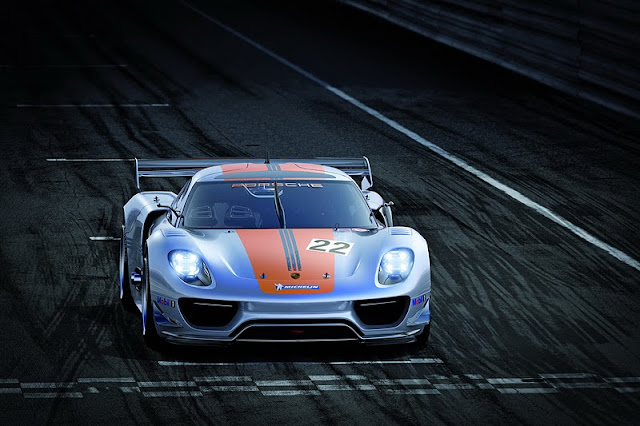
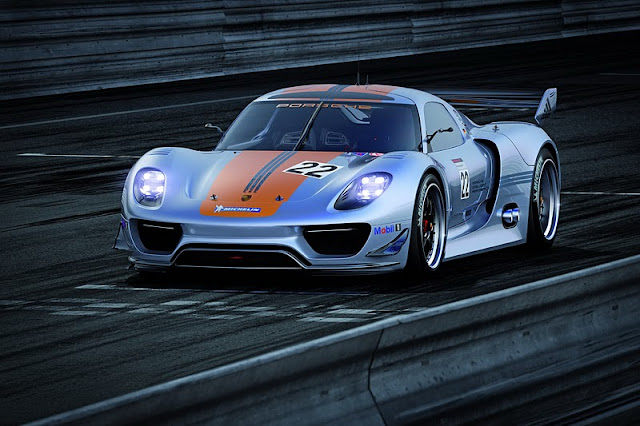
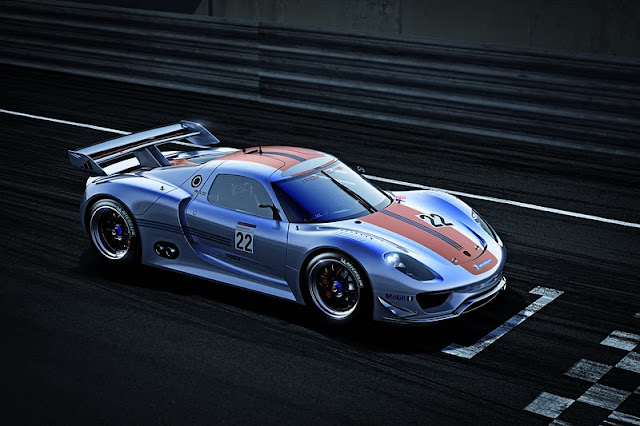
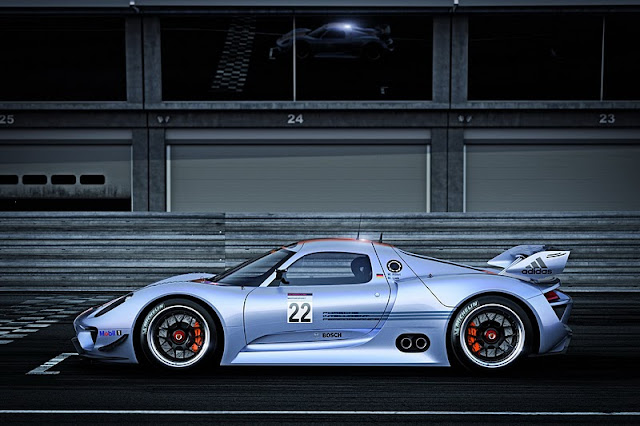
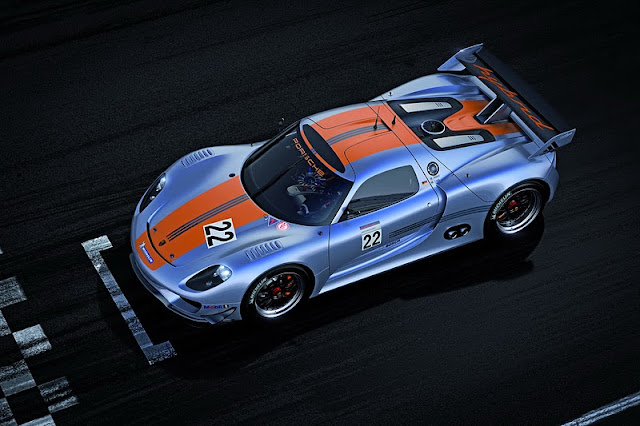
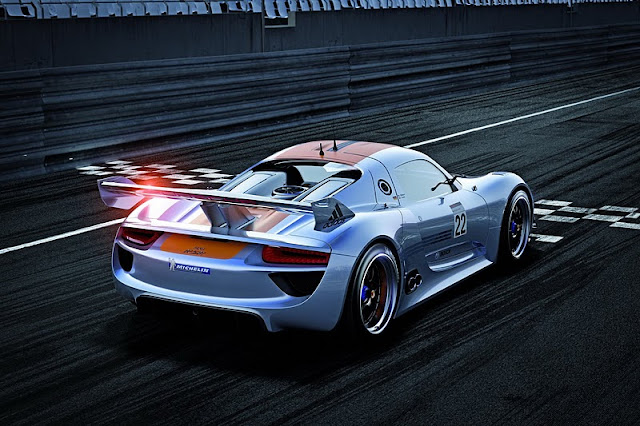
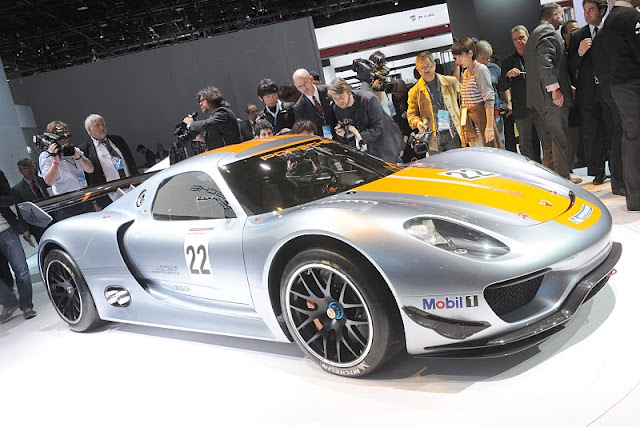
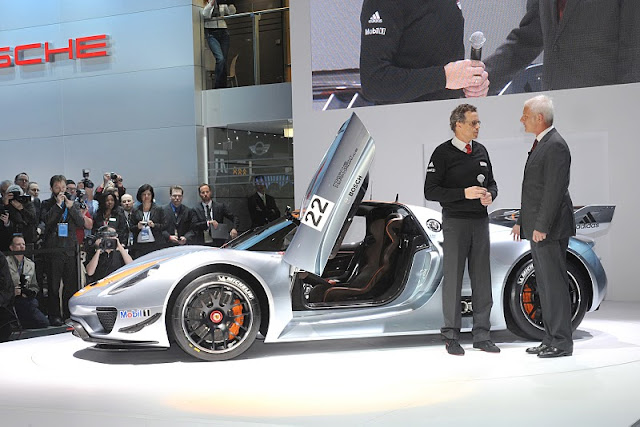
2011 Porsche 918 RSR Coupe

2011 Porsche 918 RSR Coupe

2011 Porsche 918 RSR Coupe

2011 Porsche 918 RSR Coupe

2011 Porsche 918 RSR Coupe

2011 Porsche 918 RSR Coupe

2011 Porsche 918 RSR Coupe

2011 Porsche 918 RSR Coupe

2011 Porsche 918 RSR Coupe
Labels:
Porsche
Wednesday, February 9, 2011
1999 Porsche 911 GT1 Replica
1996 Porsche GT1 replica (NOT A KIT)! This is as close as it gets to the real thing with staggering performance! This car took nearly three years to build and is a one off replica, not a re-body of another car. The chassis is fabricated of 4130 chromolly steel tubing incorporating Porsche 930 Turbo control arms with adjustable front, rear sway bars and Koni coil over rear shocks.
The body is constructed of fiberglass and carbon fiber. All exterior body paint is urethane. Every body intake vent is fully functional with the roof intake flowing high volume directly into the K&N Air filter box. The side intake vents flow through silicone racing brake vent hose into the custom fabricated brake rotor manifolds.
Transmission is a specially built 930 Turbo to run in the mid-engine configuration with high performance German CVs, a Kevlar clutch and aluminum pressure plate. Engine is an all aluminum 5.7 liter V8 producing 530 HP, 490 foot pounds of torque with Haltech engine management and Runs on 91 octane pump gas! The total weight of this car is approximately 2580 LBS. Incredible stopping power with 14 inch Brembo GT brakes on all four corners.
The interior is fitted with Sparco seats, Momo steering wheel/ shifter and many custom carbon fiber molded panels and dash. Hollywood Speedo built a nice set of Porsche 911 VDO gauges
Sunday, February 6, 2011
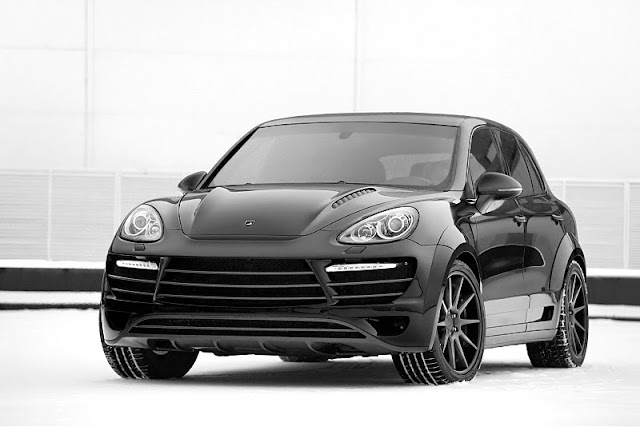
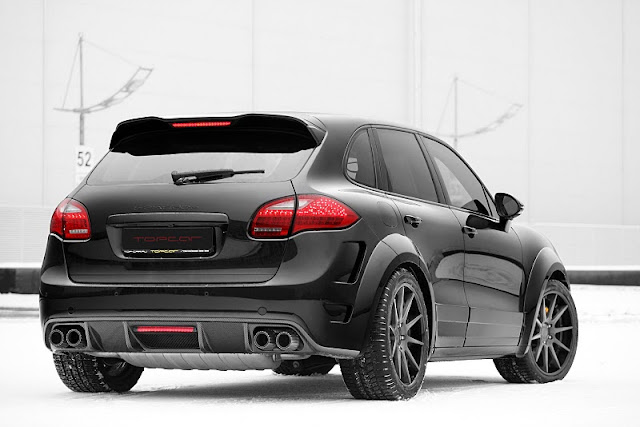
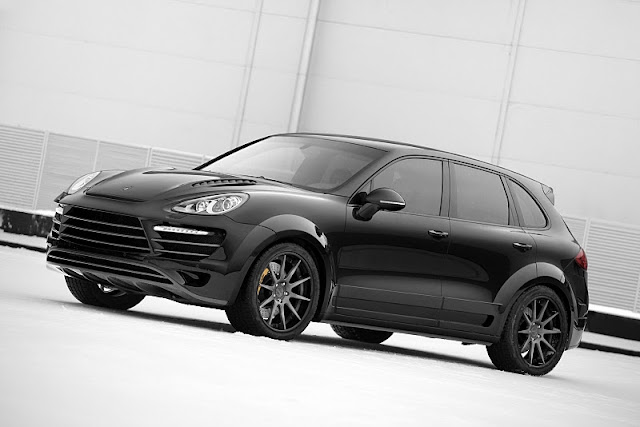
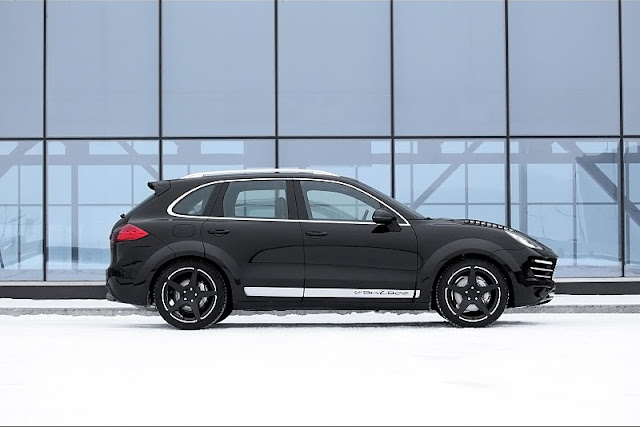
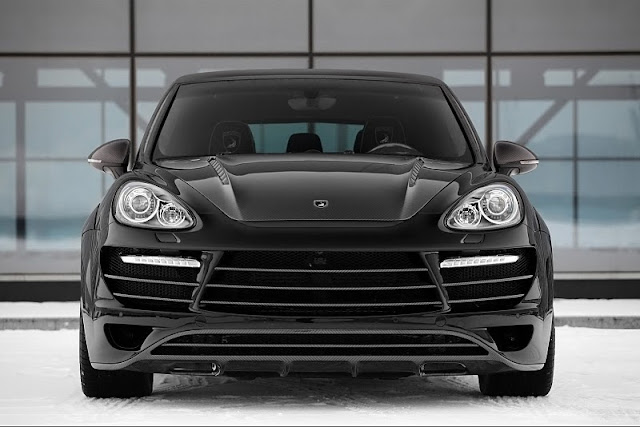
2011 Porsche Cayenne Vantage 2

2011 Porsche Cayenne Vantage 2

2011 Porsche Cayenne Vantage 2

2011 Porsche Cayenne Vantage 2

2011 Porsche Cayenne Vantage 2

2011 Porsche Cayenne Vantage 2

2011 Porsche Cayenne Vantage 2
Labels:
Porsche
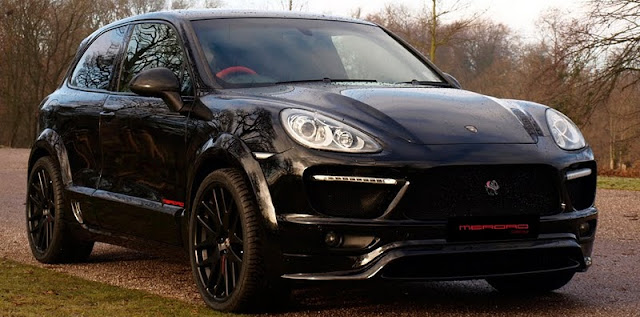
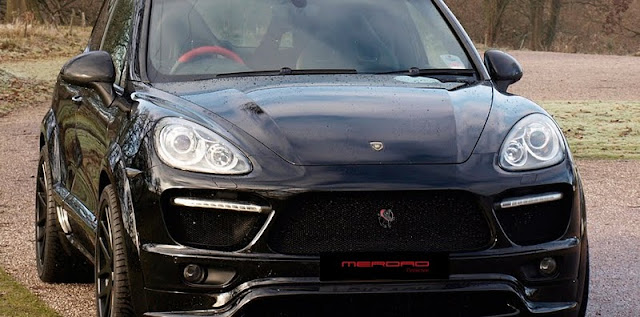
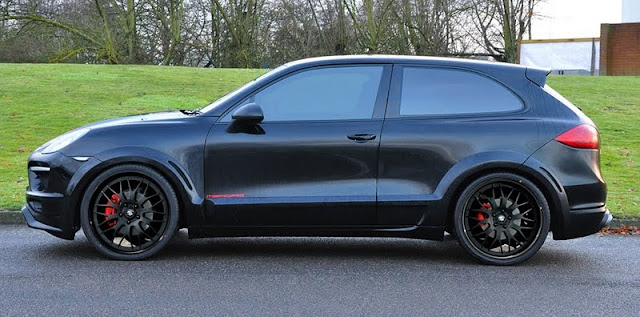
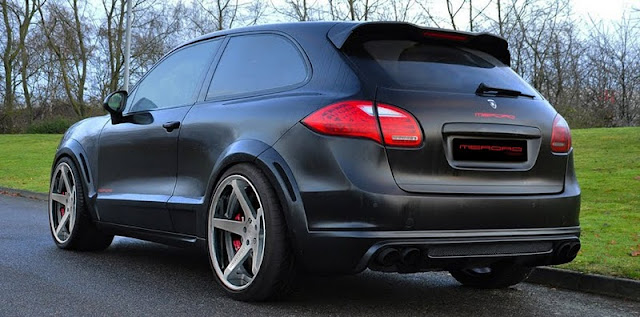
2011 Merdad Porsche Cayenne 902 Coupe

2011 Merdad Porsche Cayenne 902 Coupe

2011 Merdad Porsche Cayenne 902 Coupe

2011 Merdad Porsche Cayenne 902 Coupe

2011 Merdad Porsche Cayenne 902 Coupe
Labels:
Porsche
Wednesday, February 2, 2011
2010 Porsche Boxster Spyder
Tuesday, January 25, 2011
Porsche 911 Targa 4, 2009
The 911 Targas differ from both the Carrera Coupes and Cabriolets by dint of their stunning glass tops. The all-wheel drive Porsche 911 Targa 4 and Targa 4S are unique with roofs comprised entirely of two transparent panels. The glass extends from the windshield header back to the leading edge of the engine cover, from side frame to side frame.
More Power from Less Fuel
Both the Porsche 911 Targa 4 and 911 Targa 4S receive new engines which boast direct fuel injection, new two-piece crankcases and revised intake and exhaust systems along with Porsche VarioCam Plus intake-valve timing and lift system. By injecting the fuel directly into each cylinder's combustion chamber rather than the intake as is more common, combustion is cleaner and more complete. This technology reduces exhaust emissions and fuel consumption while simultaneously increasing engine potency.
The results are felt and appreciated immediately by the Porsche 911 Targa 4's driver. Thanks to a 6.2 percent increase in horsepower and a 5.3 percent gain torque over last year's model, the 3.6- liter engine goes from 325 to 345 hp and receives a gain in torque from 273 to 288 lb.-ft. A manual gearbox equipped 2009 911 Targa 4 can accelerate from 0 to 60 mph (96 km/h) in 5.0 seconds.
Two Clutches, No Clutch Pedal
To take full advantage of the newly designed engines, Porsche is offering drivers a transmission that delivers quicker acceleration than is possible with the standard manual gearbox while maximizing fuel efficiency. The new PDK (from the German Porsche- Doppelkupplungsgetriebe), or Porsche double-clutch, replaces the Tiptronic S as the optional gearbox in both the Porsche 911 Targa 4 and Targa 4S.
Porsche was the first automaker to successfully use this transmission technology back in the 1980s when the transmission was developed for the mighty Porsche 962 Group C race car. The Porsche 911 Targa 4 or Targa 4S driver can allow the seven-speed PDK to shift up and down automatically, or he may opt to manually shift via steering-wheel mounted paddles or the console-mounted lever, the same as with the Tiptronic S.
All-Weather Maximum Performance
In addition to their unique two-section glass roofs, the Porsche 911 Targa 4 and Targa 4S offer their drivers the added benefits of all-wheel drive. For 2009, these cars benefit from the same electronically controlled Porsche Traction Management (PTM) found under the awesome Porsche Turbo, as well as the new mchanical locking differential standard.
PTM replaces the previous models' viscous-coupling, mechanical all-wheel drive system and operates more quickly and seamlessly than its predecessor. PTM varies the torque split infinitesmely and absolutely between front and rear wheels as needed for optimum traction. However, since most purists feel-and Porsche's engineers staunchly believe-that rear-drive is critical for optimum sporty driving, PTM directs two thirds of the engine's torque to the rear wheels under normal driving conditions.
When the system determines it's needed, PTM diverts engine power and torque to the front axle in millisecond cycles. Particularly at very high speeds, all the driver feels is the car's significant stability.
Bigger, Grippier Brakes
Porsche engineers firmly believe that a car's deceleration ability must always out-perform its ability to accelerate. Commensurate with the gains in engine performance, the 2009 Porsche 911 Targa 4 and Targa 4S receive added braking capability. All four brake rotors on both cars are cross-drilled, inner vented and now 12.99 inches (330 mm) in diameter.
In addition, the monobloc, four-piston calipers are now the same as those used on the 911 Turbo. Critical refinements have been made to the airflow around the wheels to increase brake cooling all around as well.
Instantly Recognizable and Aerodynamic
With their full-glass canopy - from beltline to beltline, front cowl to rear engine cover - the Porsche 911 Targa 4 and Targa 4S look like nothing else on the road, Porsche or otherwise. But from the beltline down, the cars share a strong resemblance to the current Carrera 4 and Carrera 4S models.
Clearly, the most striking element of the 911 Targa is its 16.58 sq.-ft. glass roof. The roof is comprised of two separate segments: a sliding panel over the front seats and a hinged tailgate at the rear. The electrically operated front panel fully opens or closes in seven seconds. When open, the glass panel slides snugly beneath the tailgate, providing almost five square feet of open space above the passenger cabin.
The sliding roof comes standard with a new sun shade offering greater privacy and more effective thermal protection than before. When closed, the sun shade covers the entire area of the sliding roof panel, opening and closing electrically and independently of the roof itself.
The glass roof and tailgate are made of special tinted glass, which protects the occupants from ultraviolet radiation and excessive heat even in bright sunlight.
The rear section of the Targa top opens for access to the interior, particularly handy for getting to the storage area behind the rear seatbacks. The Porsche 911 Targa 4 and Targa 4S are the only models in the Porsche 911 range with a separately opening tailgate.
More Sophisticated and Comfortable
Beneath the glass top, the Porsche 911 Targa 4 and Targa 4S boast luxuriously appointed passenger cabins. Like all Porsches, the cars offer their occupants the protection of six airbags: dual frontal-impact airbags as well as two seat-mounted thorax-protecting side-impact airbags and two head-protecting side-impact curtain door-mounted airbags.
Interior refinements include a revamped center console highlighted by a new Porsche Communication Management system-PCM 3.0-and the availability of ventilated front seats.
The optional navigation module now has a 40 GB hard drive. Other available features with the newest PCM include XM satellite radio with XM NavTraffic capability, Bluetooth connectivity, an iPod port, a USB port and an auxiliary jack.
Interior comfort may be further enhanced thanks to optional seat ventilating fans, available in conjunction with heated seats. These circulate air through the seatback and cushion upholstery to expedite cooling, heating and/or drying the driver and passenger.
More Power from Less Fuel
Both the Porsche 911 Targa 4 and 911 Targa 4S receive new engines which boast direct fuel injection, new two-piece crankcases and revised intake and exhaust systems along with Porsche VarioCam Plus intake-valve timing and lift system. By injecting the fuel directly into each cylinder's combustion chamber rather than the intake as is more common, combustion is cleaner and more complete. This technology reduces exhaust emissions and fuel consumption while simultaneously increasing engine potency.
The results are felt and appreciated immediately by the Porsche 911 Targa 4's driver. Thanks to a 6.2 percent increase in horsepower and a 5.3 percent gain torque over last year's model, the 3.6- liter engine goes from 325 to 345 hp and receives a gain in torque from 273 to 288 lb.-ft. A manual gearbox equipped 2009 911 Targa 4 can accelerate from 0 to 60 mph (96 km/h) in 5.0 seconds.
Two Clutches, No Clutch Pedal
To take full advantage of the newly designed engines, Porsche is offering drivers a transmission that delivers quicker acceleration than is possible with the standard manual gearbox while maximizing fuel efficiency. The new PDK (from the German Porsche- Doppelkupplungsgetriebe), or Porsche double-clutch, replaces the Tiptronic S as the optional gearbox in both the Porsche 911 Targa 4 and Targa 4S.
Porsche was the first automaker to successfully use this transmission technology back in the 1980s when the transmission was developed for the mighty Porsche 962 Group C race car. The Porsche 911 Targa 4 or Targa 4S driver can allow the seven-speed PDK to shift up and down automatically, or he may opt to manually shift via steering-wheel mounted paddles or the console-mounted lever, the same as with the Tiptronic S.
All-Weather Maximum Performance
In addition to their unique two-section glass roofs, the Porsche 911 Targa 4 and Targa 4S offer their drivers the added benefits of all-wheel drive. For 2009, these cars benefit from the same electronically controlled Porsche Traction Management (PTM) found under the awesome Porsche Turbo, as well as the new mchanical locking differential standard.
PTM replaces the previous models' viscous-coupling, mechanical all-wheel drive system and operates more quickly and seamlessly than its predecessor. PTM varies the torque split infinitesmely and absolutely between front and rear wheels as needed for optimum traction. However, since most purists feel-and Porsche's engineers staunchly believe-that rear-drive is critical for optimum sporty driving, PTM directs two thirds of the engine's torque to the rear wheels under normal driving conditions.
When the system determines it's needed, PTM diverts engine power and torque to the front axle in millisecond cycles. Particularly at very high speeds, all the driver feels is the car's significant stability.
Bigger, Grippier Brakes
Porsche engineers firmly believe that a car's deceleration ability must always out-perform its ability to accelerate. Commensurate with the gains in engine performance, the 2009 Porsche 911 Targa 4 and Targa 4S receive added braking capability. All four brake rotors on both cars are cross-drilled, inner vented and now 12.99 inches (330 mm) in diameter.
In addition, the monobloc, four-piston calipers are now the same as those used on the 911 Turbo. Critical refinements have been made to the airflow around the wheels to increase brake cooling all around as well.
Instantly Recognizable and Aerodynamic
With their full-glass canopy - from beltline to beltline, front cowl to rear engine cover - the Porsche 911 Targa 4 and Targa 4S look like nothing else on the road, Porsche or otherwise. But from the beltline down, the cars share a strong resemblance to the current Carrera 4 and Carrera 4S models.
Clearly, the most striking element of the 911 Targa is its 16.58 sq.-ft. glass roof. The roof is comprised of two separate segments: a sliding panel over the front seats and a hinged tailgate at the rear. The electrically operated front panel fully opens or closes in seven seconds. When open, the glass panel slides snugly beneath the tailgate, providing almost five square feet of open space above the passenger cabin.
The sliding roof comes standard with a new sun shade offering greater privacy and more effective thermal protection than before. When closed, the sun shade covers the entire area of the sliding roof panel, opening and closing electrically and independently of the roof itself.
The glass roof and tailgate are made of special tinted glass, which protects the occupants from ultraviolet radiation and excessive heat even in bright sunlight.
The rear section of the Targa top opens for access to the interior, particularly handy for getting to the storage area behind the rear seatbacks. The Porsche 911 Targa 4 and Targa 4S are the only models in the Porsche 911 range with a separately opening tailgate.
More Sophisticated and Comfortable
Beneath the glass top, the Porsche 911 Targa 4 and Targa 4S boast luxuriously appointed passenger cabins. Like all Porsches, the cars offer their occupants the protection of six airbags: dual frontal-impact airbags as well as two seat-mounted thorax-protecting side-impact airbags and two head-protecting side-impact curtain door-mounted airbags.
Interior refinements include a revamped center console highlighted by a new Porsche Communication Management system-PCM 3.0-and the availability of ventilated front seats.
The optional navigation module now has a 40 GB hard drive. Other available features with the newest PCM include XM satellite radio with XM NavTraffic capability, Bluetooth connectivity, an iPod port, a USB port and an auxiliary jack.
Interior comfort may be further enhanced thanks to optional seat ventilating fans, available in conjunction with heated seats. These circulate air through the seatback and cushion upholstery to expedite cooling, heating and/or drying the driver and passenger.
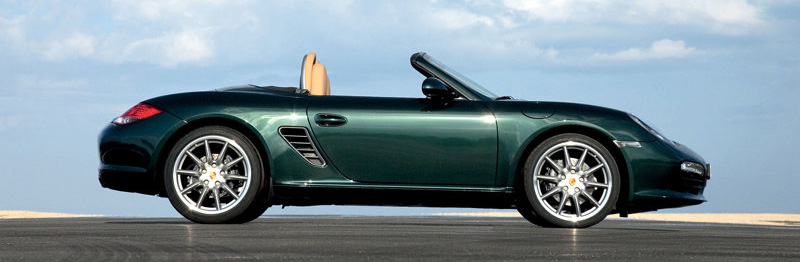
Porsche Boxster, 2009
In 1948, the 356 was the first sports car to bear the Porsche name, and in July that year the lightweight mid-engined roadster achieved its first motorsport victory. In 1953, the Porsche 550 Spyder was launched. This agile, lightweight race car was powered by a high performance 'boxer' engine which took it to countless international victories.
Porsche presented the second generation of the mid-engined Porsche Boxster roadster at the 2008 Los Angeles Motor Show. The highlight of the new generation is the new flat-six 'boxer' engines, developed with new technical features from the ground up, providing not only more power, but also significantly greater fuel efficiency.
A further improvement of both fuel economy and performance is guaranteed by the Porsche Doppelkupplungsgetriebe (PDK), the new double-clutch gearbox now available as an option on both the Porsche Boxster and Boxster S.
Displacing 2.9-litres, the engine of the Porsche Boxster develops 255 bhp (188 kW) in the Boxster, an increase of 10 horsepower over the prior 2.7-litre model.
The 3.4-litre power unit in the Porsche Boxster S now features Direct Fuel Injection, and delivers 310 bhp (228 kW), up by 15 bhp.
Direct Fuel Injection standard on 3.4-litre S engine
The driver benefits from a further advantage of direct injection every time they touch the throttle pedal: with fuel being injected fractions of a second prior to combustion, the engines respond more directly and spontaneously to even the slightest movement of the driver's right foot. This is not only the case when accelerating, but also when lifting off the throttle, for engine speed drops more quickly and smoothly since there is no residual fuel left in the intake manifold which might otherwise prolong the combustion process.
Design emphasises performance
The seamless blend of function and design has always been the Porsche philosophy. The result is a design consistency which is recognisable from every angle. A design which is both powerful and refined, and whose lines emphasise its sports performance.
The evolutionary styling of the next generation Porsche Boxster embodies these principles. The latest models are clearly distinguishable from outside through their newly-designed nose and tail. The new halogen headlights with their integrated direction indicators are reminiscent of the lights on the Carrera GT, while at the rear, new LED lights taper to the outside and are integrated elegantly in to the restyled bodywork.
PDK: shifting gears more quickly, reducing fuel consumption
The new Porsche Boxster models are available with the Porsche-Doppelkupplungsgetriebe (PDK) carried over directly from motor sport, and replacing the former Tiptronic S torque converter automatic transmission. When equipped with PDK, the Porsche Boxster accelerates from 0-62mph (100 km/h) 0.1 seconds faster than with the manual six-speed gearbox.
Acceleration is particularly fast and dynamic with the optional Sports Chrono Package Plus featuring Launch Control; this offers maximum acceleration from a standing start and also a Race Track Gearshift Strategy for the fastest conceivable gear change as an exclusive highlight on the PDK models.
Porsche Doppelkupplungsgetriebe (PDK) - in detail
The next generation Porsche Boxster and Boxster S are available for the first time with the new Porsche Doppelkupplungsgetriebe (PDK), literally Porsche double-clutch gearbox. Offering no less than seven forward gears, the new gearbox combines the driving comfort of a torque converter-equipped automatic transmission with the dynamic manual gearshift functionality of a sequential racing gearbox. PDK also boasts an entirely automatic gearshift function, and replaces the Porsche Tiptronic S automatic transmission previously offered. Through its optimised and adaptive gearshift programmes, PDK further improves the acceleration of the Porsche Boxster models and reduces fuel consumption to an even lower level.
In principle, the PDK consists of a conventional manual gearbox and a hydraulic control system divided into two separate transmission units. Two wet clutches in radial arrangement, controlled hydraulically, and using oil for both cooling and lubrication, form the heart of the transmission. One clutch is for the first transmission unit with the uneven gear ratios (1,3,5,7) and reverse, and the other clutch is for the second transmission unit with the even gears (2,4,6). Via a number of pressure valves, the hydraulic control unit masterminds both the wet clutches and the shift cylinders activating the transmission ratio required.
The gearshift perceived by the driver comes not from the gears actually changing, but from the change of positive clutch engagement. In this case, the clutch on one transmission opens or disengages while the clutch on the other transmission closes or engages in a simultaneous process. The big advantage is an even faster gearshift than with a conventional manual gearbox or torque converter automatic transmission. The gears are already 'in mesh' when shifting and the power of the engine need not be interrupted in the process.
Porsche presented the second generation of the mid-engined Porsche Boxster roadster at the 2008 Los Angeles Motor Show. The highlight of the new generation is the new flat-six 'boxer' engines, developed with new technical features from the ground up, providing not only more power, but also significantly greater fuel efficiency.
A further improvement of both fuel economy and performance is guaranteed by the Porsche Doppelkupplungsgetriebe (PDK), the new double-clutch gearbox now available as an option on both the Porsche Boxster and Boxster S.
Displacing 2.9-litres, the engine of the Porsche Boxster develops 255 bhp (188 kW) in the Boxster, an increase of 10 horsepower over the prior 2.7-litre model.
The 3.4-litre power unit in the Porsche Boxster S now features Direct Fuel Injection, and delivers 310 bhp (228 kW), up by 15 bhp.
Direct Fuel Injection standard on 3.4-litre S engine
The driver benefits from a further advantage of direct injection every time they touch the throttle pedal: with fuel being injected fractions of a second prior to combustion, the engines respond more directly and spontaneously to even the slightest movement of the driver's right foot. This is not only the case when accelerating, but also when lifting off the throttle, for engine speed drops more quickly and smoothly since there is no residual fuel left in the intake manifold which might otherwise prolong the combustion process.
Design emphasises performance
The seamless blend of function and design has always been the Porsche philosophy. The result is a design consistency which is recognisable from every angle. A design which is both powerful and refined, and whose lines emphasise its sports performance.
The evolutionary styling of the next generation Porsche Boxster embodies these principles. The latest models are clearly distinguishable from outside through their newly-designed nose and tail. The new halogen headlights with their integrated direction indicators are reminiscent of the lights on the Carrera GT, while at the rear, new LED lights taper to the outside and are integrated elegantly in to the restyled bodywork.
PDK: shifting gears more quickly, reducing fuel consumption
The new Porsche Boxster models are available with the Porsche-Doppelkupplungsgetriebe (PDK) carried over directly from motor sport, and replacing the former Tiptronic S torque converter automatic transmission. When equipped with PDK, the Porsche Boxster accelerates from 0-62mph (100 km/h) 0.1 seconds faster than with the manual six-speed gearbox.
Acceleration is particularly fast and dynamic with the optional Sports Chrono Package Plus featuring Launch Control; this offers maximum acceleration from a standing start and also a Race Track Gearshift Strategy for the fastest conceivable gear change as an exclusive highlight on the PDK models.
Porsche Doppelkupplungsgetriebe (PDK) - in detail
The next generation Porsche Boxster and Boxster S are available for the first time with the new Porsche Doppelkupplungsgetriebe (PDK), literally Porsche double-clutch gearbox. Offering no less than seven forward gears, the new gearbox combines the driving comfort of a torque converter-equipped automatic transmission with the dynamic manual gearshift functionality of a sequential racing gearbox. PDK also boasts an entirely automatic gearshift function, and replaces the Porsche Tiptronic S automatic transmission previously offered. Through its optimised and adaptive gearshift programmes, PDK further improves the acceleration of the Porsche Boxster models and reduces fuel consumption to an even lower level.
In principle, the PDK consists of a conventional manual gearbox and a hydraulic control system divided into two separate transmission units. Two wet clutches in radial arrangement, controlled hydraulically, and using oil for both cooling and lubrication, form the heart of the transmission. One clutch is for the first transmission unit with the uneven gear ratios (1,3,5,7) and reverse, and the other clutch is for the second transmission unit with the even gears (2,4,6). Via a number of pressure valves, the hydraulic control unit masterminds both the wet clutches and the shift cylinders activating the transmission ratio required.
The gearshift perceived by the driver comes not from the gears actually changing, but from the change of positive clutch engagement. In this case, the clutch on one transmission opens or disengages while the clutch on the other transmission closes or engages in a simultaneous process. The big advantage is an even faster gearshift than with a conventional manual gearbox or torque converter automatic transmission. The gears are already 'in mesh' when shifting and the power of the engine need not be interrupted in the process.
Tuesday, December 21, 2010
2011 Porsche Cayman R
Thursday, December 2, 2010
2011 Porsche Cayenne
Subscribe to:
Posts (Atom)